Birth of a beer festival
 0
0 


|
|
|
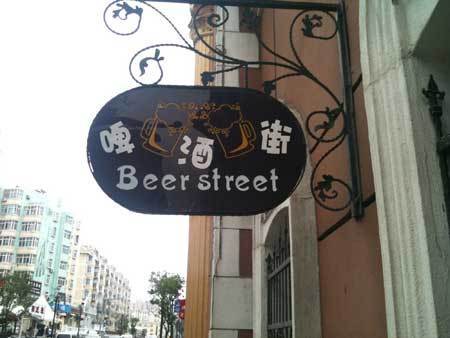
This way to Beer Street. Photo: Hao Ying |
Mad Men, China-style
Eventually, the Germans were pushed out of Qingdao at the start of World War I by the invading Japanese, who bought the plant in 1916, and continued producing Tsingtao, along with their own Asahi and Kirin beer, until the end of World War II.
The Nationalists then handed the factory over to a Chinese businessman, who, with the help of the Germans, created in 1947 the first film ad in China.
This newsreel, played continuously at the museum, features beer bottles rolling down the factory's modern assembly line conveyor belt, before being packed into wooden crates by beautiful women, to be sent around the country by air and sea.
But their hopes of marketing Tsingtao to the common people were smashed by civil war and the Communist takeover of both the country and the company. Production plunged as the government scrambled for hops, urging farmers to grow the climbing plant essential for making beer.
From 1949 until 1993, 98 percent of Tsingtao sold was export. For regular Chinese Joes, cash could not buy a Tsingtao - only ration coupons could.
After the open-and-reform policies of the late 1970s, the company slowly started advertising again. Ads from this era show Chinese people drinking draft beer from bowls and jars; ice-cold pint glasses, of course, clash with the Traditional Chinese Medicine theory that cold drinks are bad for health. As part of this marketing push, the Qingdao Beer Festival was launched in 1991.


Go to Forum >>0 Comments