Weifang kite festival attracts international hobbyists
 0 Comment(s)
 Print
Print E-mail China Daily, July 23, 2012


But how much longer could this ancient sport possibly hold out against the tide of more modern forms of entertainment and shrinking attention spans?
"You can only hope that events like these might help take the cause forward, but there's no guarantee that might actually happen," says Tonio.
One of Weifang's major lures, we realized, was the prospect of meeting old friends and making new ones. As Muammar Quaddafi, a Malaysian who runs the Borneo International Kite Festival, says, "It is about building relationships through kites. The kite-flying fraternity is like one big happy family, cutting across cultures."
And while Weifang as the host city was the seat of many such reunions, it was also, as participant Wang Jiahua says, "an opportunity to develop local economy and for Weifang culture to go out into the world".
Cui Yongli, a Qingdao native and a Weifang festival veteran who has made winning a habit during the past 20 years, has attended several festivals abroad.
"Weifang is mounted on a far larger scale," he says of the annual April festival. "Here you get to see a lot more in terms of people and kites."
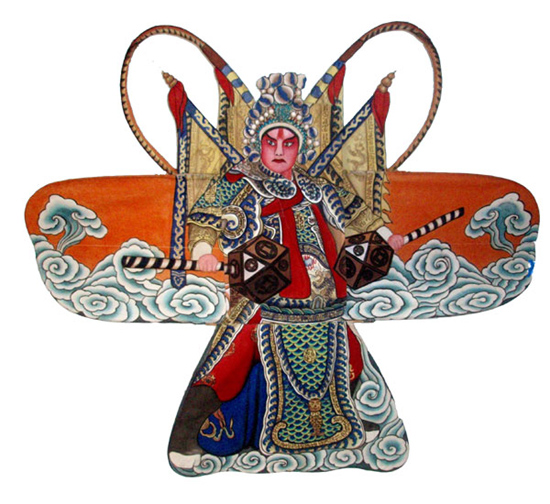
His own offering is a case in point. From enormous geometric tiered kites, to the regulation centipede dragon to traditional kites with floral images - one could find every sort under his huge tent. For a while he held the record for the longest snake-shaped kite, measuring slightly more than 882 meters.


Go to Forum >>0 Comment(s)