Autistic art exhibition calls for inclusion
- By Zhang Junmian
 0 Comment(s)
 Print
Print E-mail China.org.cn, April 1, 2013


It's important to create an inclusive social environment for the growth of autistic children, Stephen von Tetzchner, a senior psychology professor from Norway's University of Oslo, said.
|
|
|
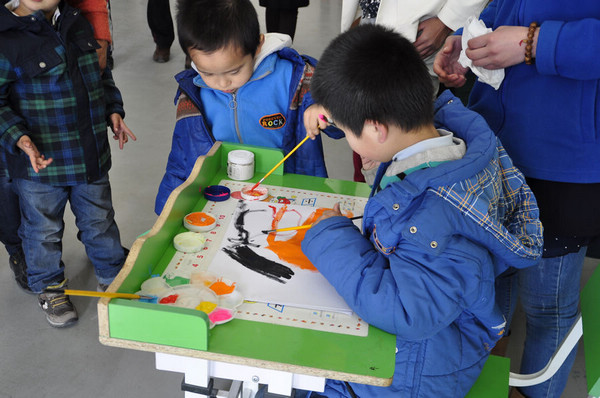
An autistic boy is drawing at an art exhibition featuring paintings, calligraphies and handicrafts by autistic kids held in Beijing's Shunyi District on March 30. [Photo by Zhang Junmian/China.org.cn] |
Tetzchner also stressed that families dealing with autism should play a leading role in exploring the potential strengths of their autistic children, including helping them learn the necessary life skills at an earlier stage in life. "The earlier they take action, the better outcomes they will obtain."
Wucailu, founded in 2004, is now a national leader in conducting proven-efficacious interventions for autistic children aged between three and seven through an Applied Behavior Analysis (ABA) approach.
More than 3,000 kids have made great progress through the trainings given here over the past nine years, reducing acts of inappropriate behavior, as well as increasing communication and learning capabilities.
|
|
|
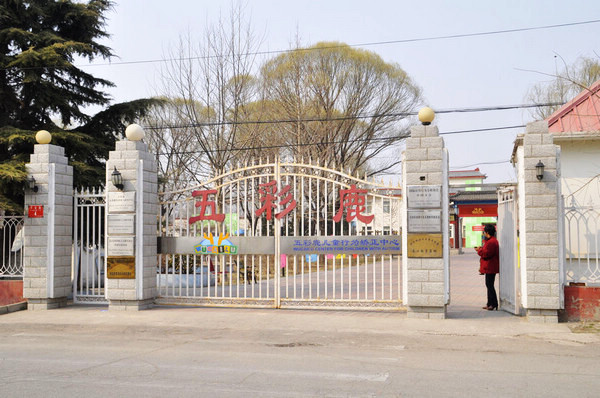
Wucailu is known as China's largest rehabilitation facility for autistic children. [Photo by Zhang Junmian/China.org.cn] |
Sun couldn't forget all hardships she has experienced over the years with the aim of turning Wucailu into a well-equipped facility with one hundred caring and compassionate professionals paving the way for nearly 200 students on three campuses. Nevertheless, Sun said, "I choose to persist in what I am doing to help more autistic children, even though I was sometimes misunderstood by others."
She said, "I always believe it is more blessed to give than to receive; and I also see the society is becoming more inclusive. This is why I simply can't stop."
According to the latest statistics, there are currently some 67 million people suffering from autism worldwide. In China alone, there are about 1-1.5 million autism sufferers, usually looked down upon by others, and this number is gradually increasing. The disorder has thus far become China's main cause of children's mental disability and impairment.
However, China only has more than 500 rehabilitation facilities for autistic children, and most of them are non-governmental facing various difficulties in their quest for sustainable development.
Statistics show that rehabilitative treatment typically costs a family between 15,000 and 30,000 yuan annually. Many families are forced to discontinue such treatments due to the costs and a lack of rehabilitation facilities. About 80 percent of autistic children are not registered in any rehabilitation program.


Go to Forum >>0 Comment(s)