Food supply not keeping pace with demand
- By Gerard Lyons
 0 Comment(s)
 Print
Print E-mail
China Daily, October 14, 2011
E-mail
China Daily, October 14, 2011


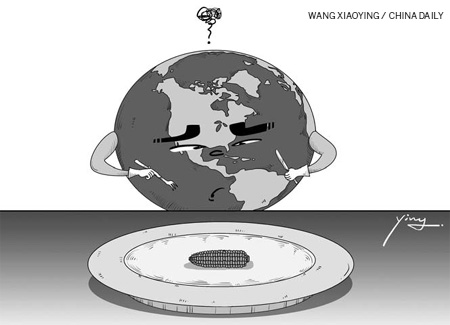
World Food Day is observed each year on Oct 16. This date commemorates the founding of the Food and Agriculture Organization of the United Nations in 1945. This year the theme of World Food Day is "Food Prices: from crisis to stability". Rarely could the subject have been more relevant for economies and people across the globe.
According to the UN, world food prices surged to an all-time high in February. Even though many items have fallen in price since then, food prices are still high and have doubled over the past five years. The trend for food prices is clearly up.
Demand is rising. Supply is not keeping pace. Several factors explain this worrying development. One positive is that as emerging economies grow, more people are moving out of poverty, finding jobs and are able to feed themselves or spend more on food.
As they do, families are changing their diets because they have access to a greater variety of foods. Rising demand for meat is just one example. Global food consumption per person has risen on average by one fifth since the 1960s.
The trouble is not everyone has been prepared for this. There are widespread concerns about dwindling crop yields and greater scarcity of fertile land. These concerns are not eased by infrastructure development and rapid urbanization.
There is still much that needs to happen to eradicate poverty, find jobs and see living standards rise. As this happens, food demand is likely to keep rising. The world's population is expected to rise from 7 billion to 9 billion by 2050. Food demand is likely to rise, in both quantity and quality.
What needs to happen to meet this challenge? Many things. There is likely to be a price, quantity and technology response. The price response has already been evident as food prices rise. This is a concern as the poorest spend a greater proportion of their income on food, and they are least able to cope with higher prices. In some rapidly growing economies, rising food prices can feed general inflation, explaining why many central banks have been tightening policy. World Food Day will have rising food prices at centre stage.
The World Bank recently highlighted high rates of malnutrition among young children in India and parts of Africa. But many countries have issues. For instance, Vietnam, the Philippines and China are among the countries in East Asia that are vulnerable to food price inflation.
Throughout this year, the Group of 20 major economies has been seeking ways to curb speculative activity from pushing commodity prices higher. This issue still needs to be addressed.
Perhaps the most interesting questions are whether supply can respond and how technological progress can help. There is cause for optimism.


Go to Forum >>0 Comment(s)