 Share:

Yicai:
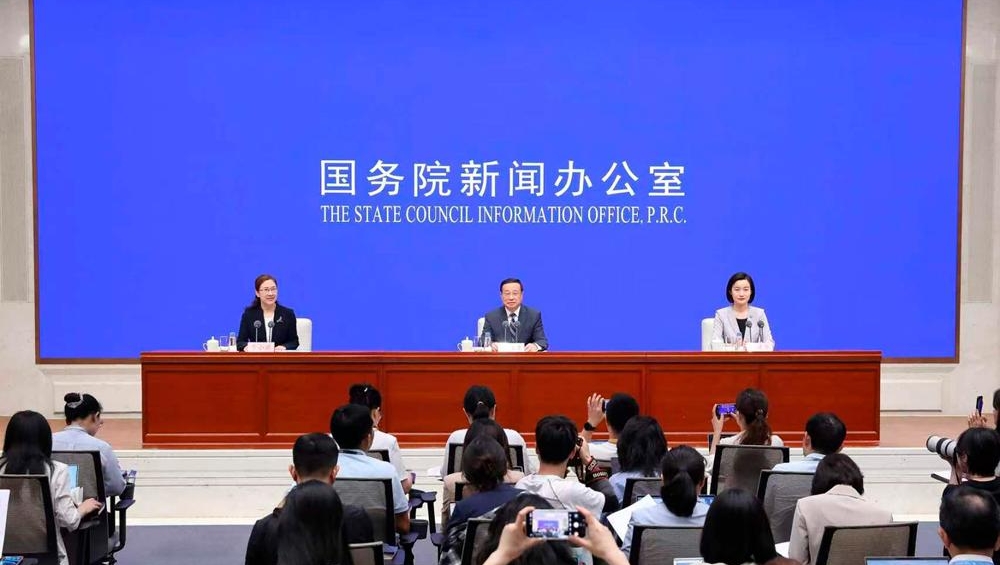
We noticed that the PPI rose year on year in June, but fell month on month. What does this mean? What are the main influencing factors behind this? Is the PPI expected to remain stable going forward? Thank you.
Mao Shengyong:
Ms. Wang will answer the questions.
Wang Guanhua:
Thank you for your questions. Since the beginning of this year, especially since March, industrial producer prices have shown a gradual upward trend due to factors such as the transmission of rising international commodity prices and expanding demand in some domestic industries. The PPI rose 1.5% year on year in the first half of this year, with a decrease of 0.6% in the first quarter and an increase of 3.6% in the second quarter. This is the first time that the PPI quarterly growth rate has turned positive since the fourth quarter of 2022. In terms of the monthly changes, the PPI has risen for four consecutive months since March, with a 4.1% increase in June, a slight increase of 0.2 percentage point compared to the previous month. In June, expanding demand in some industries continued to have a positive impact on prices in the production sector. In particular, the accelerated electrification process, the expansion of artificial intelligence application scenarios, and the increased demand for computing power have driven up prices in industries such as non-ferrous metals, electronics, and electrical machinery.
As everyone has noticed, the PPI fell month on month in June after rising for eight consecutive months. This was mainly due to the transmission effect of the decline in international crude oil prices, and does not mean that the interaction between supply and demand of domestic industrial products has changed fundamentally. In June, international crude oil prices fell sharply. According to World Bank data, the average price of international crude oil fell by 18.6% month on month. As a result, prices in domestic industries such as the petrochemical industry weakened significantly, which was the main reason for the month-on-month decline in PPI. In terms of the major industries affected, the factory-gate price of the oil and gas extraction industry fell by 11.8% month on month in June, while the price of the oil, coal and other fuel processing industry fell by 1.9%. In addition, prices in the related chemical and chemical fiber industries, which had risen in the previous month, began to fall. These four industries together contributed to a month-on-month decrease of about 0.38 percentage point in the PPI that month. In terms of other industries, production prices have remained generally stable. In particular, the accelerated transformation towards smart and green technologies has led to price increases compared to the previous month in industries such as wearable smart device manufacturing, virtual reality device manufacturing, and biomass fuel processing. In June, due to a temporary tight supply and increased demand for coal during the peak summer season, the price of coal mining and washing industry rose by 5.6% month on month.
In the next stage, the PPI is expected to remain stable with good support. The rapid integration of artificial intelligence across sectors, alongside surging demand for computing power and a gradual optimization of market competition order, may drive up prices in related industries. Despite increasing uncertainties and unforeseeable external factors, and the continued uncertainty surrounding international commodity price movements, China possesses a complete range of industries, strong industrial production capacity, diversified energy import channels, and ample reserves. The resilience of its industrial and supply chains continues to improve, enabling it to withstand external risks and address complex issues. Overall, the impact of external factors is controllable. Thank you.
Shou Xiaoli:
Thank you to the two speakers, and thank you to all the participating journalists. Today's briefing is hereby concluded. Goodbye.
Translated and edited by Yang Chuanli, Liao Jiaxin, Wang Xingguang, Yan Bin, You Jiaxin, Xu Kailin, Wang Mengru, Yan Xiaoqing, Wang Yanfang, Li Huiru, Wang Qian, Zhou Jing, Huang Shan, Zhu Bochen, Zhang Rui, Ma Yujia, Gong Yingchun, Liu Sitong, David Ball, Jay Birbeck, and Tudor Finneran. In case of any discrepancy between the English and Chinese texts, the Chinese version is deemed to prevail.


 京公网安备 11010802027341号