Share:

Dingduan News:
The central government has rolled out a series of measures to stabilize the real estate market this year, and local governments have continuously adjusted and optimized their real estate policies according to local conditions. How effective have these measures been? What positive changes are taking place in the real estate market? Thank you.
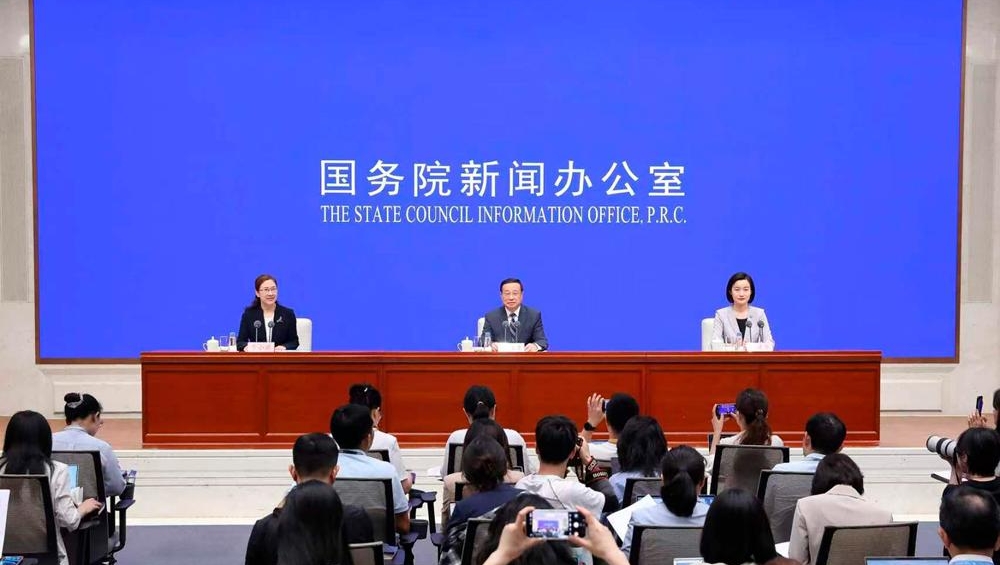
Mao Shengyong:
Thank you for your questions. Real estate is an area that everyone is following closely. In recent years, local governments have followed the decisions and plans of the CPC Central Committee, adopting city-specific policies and steadily refining their real estate policies to control the number of new real estate projects, reduce housing inventory, and improve supply. They have relaxed purchase restrictions in an orderly manner, deepened reform of the housing provident fund system, increased the supply of affordable housing, and advanced urban renewal and redevelopment. Working on both the supply and demand sides, they have rolled out a package of policy measures. Figures for the first half of the year show that policies are gradually taking effect and that some positive changes have emerged in the real estate market. These fall into several areas.
First, the sales prices of commercial residential homes in first-tier cities have risen for four consecutive months. Since March, the sales prices of new and pre-owned residential properties in first-tier cities have risen for four consecutive months. From March to June, the month-on-month increase in sales prices of newly built commercial residential homes in first-tier cities ranged from 0.1% to 0.2%. Prices of pre-owned homes increased between 0.3% and 0.4%. The overall decline in sales prices of commercial residential properties in second- and third-tier cities has narrowed. In June, the sales prices of newly built commercial residential homes in second-tier cities held steady month on month, reversing the decline recorded in the previous month. Meanwhile, the decline in the sales prices of newly built commercial residential homes in third-tier cities narrowed by 0.1 percentage point compared with the previous month. Year on year, the declines in sales prices of newly built commercial residential homes in second-tier cities and of pre-owned homes in second- and third-tier cities both narrowed compared to the previous month.
Second, the floor space of unsold commercial housing nationwide has declined for four consecutive months. Efforts to reduce the inventory of commercial housing continue to advance, and policy measures are taking effect, resulting in a decrease in the floor space of unsold commercial housing. At the end of June, the total floor space of unsold commercial housing nationwide fell 0.9% year on year, with the decline widening by 0.5 percentage point compared to the previous month, marking the fourth consecutive month of decline. Specifically, the floor space of properties that have been unsold for less than three years decreased by 3.5%.
Third, the pre-owned housing market is relatively active. As the real estate market continues to adjust, the structure and scale of property transactions are undergoing profound changes. The traditional incremental transaction pattern, which is dominated by new home sales, is rapidly shifting toward a combination of new and pre-owned home sales, with pre-owned home transactions becoming an important component of residential transactions. According to official data, the current transaction area of pre-owned homes is now comparable to that of new homes. In the first half of the year, the floor area of pre-owned homes transacted via online registration increased by 10.2% year on year, with the growth rate accelerating by 2.5 percentage points compared to January-May level. If we look at new and pre-owned home sales contracts together, the total transaction volume has seen continuous positive growth over the past three months.
Fourth, expectations for the real estate market have improved. According to an NBS survey in 70 large and medium-sized cities, real estate professionals' expectations for the price trends of both new and pre-owned homes improved after the Spring Festival. In June, 63.1% of real estate professionals expected new residential property sales prices to remain stable or rise in the next six months, remaining above 60% for four consecutive months and rebounding by 20 percentage points from last year's low.
Overall, the relationship between supply and demand in the real estate market is gradually improving, market expectations are recovering, and some positive changes have emerged in the market. Going forward, we will continue to follow the decisions and plans of the CPC Central Committee and the State Council, adopt city-specific policies to control the number of new real estate projects, reduce housing inventory, and improve supply, to promote the stable and healthy development of the real estate market. Thank you.


 京公网安备 11010802027341号