 Share:

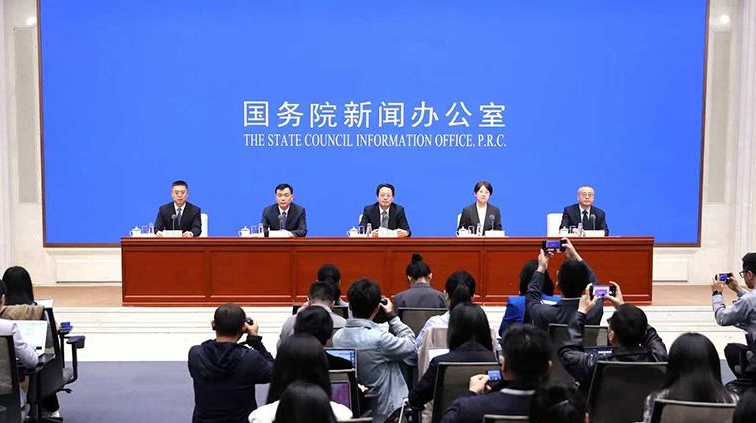
Speakers:
Mr. Wang Changlin, vice chairman of the National Development and Reform Commission (NDRC)
Ms. Chen Lei, director general of the Department of Development Planning of the NDRC
Mr. Zheng Jian, director general of the Department of Emerging Air Economy of the NDRC
Mr. Fu Jiuling, director general of the Department of Industry of the NDRC
Chairperson:
Mr. Zhou Jianshe, deputy director general of the Press Bureau of the State Council Information Office (SCIO) and spokesperson of the SCIO
Date:
April 17, 2026
Zhou Jianshe:
Ladies and gentlemen, good morning. Welcome to this press conference held by the State Council Information Office (SCIO). This year marks the start of the 15th Five-Year Plan period (2026-2030). The SCIO will hold a series of briefings on the theme of "Embarking on the 15th Five-Year Plan," focusing on providing an overview of the strategic arrangements for socio-economic development during the period. This is the first press conference in the series. Today, we are joined by Mr. Wang Changlin, vice chairman of the National Development and Reform Commission (NDRC), who will brief you on promoting high-quality development during the 15th Five-Year Plan period, and take your questions.
Also present at today's press conference are Ms. Chen Lei, director general of the Department of Development Planning of the NDRC; Mr. Zheng Jian, director general of the Department of Emerging Air Economy of the NDRC; and Mr. Fu Jiuling, director general of the Department of Industry of the NDRC.
Now, I'll give the floor to Mr. Wang for his introduction.
Wang Changlin:
Friends from the media, ladies and gentlemen, good morning. The outline of the 15th Five-Year Plan (2026-30) for national economic and social development was officially released last month. As a task-oriented document that builds broad consensus on development, it translates the grand blueprint set out in the recommendations by the Central Committee of the Communist Party of China (CPC) into implementation plans and a roadmap, drawing widespread attention both at home and abroad. From the first to the 14th Five-Year Plan, each plan has marked a step toward national strength, taking China from poverty and backwardness more than 70 years ago to flourishing prosperity. With less than a decade remaining before basically achieving socialist modernization, the 15th Five-Year Plan period will serve as a key stage to consolidate the foundation and press ahead on all fronts. The outline puts forward a number of groundbreaking and pioneering innovation measures. In the next phase of our work, we will focus on four key areas.
First, greater emphasis will be placed on consolidating the foundation of the real economy and fostering new quality productive forces. Over the years, China's economy has weathered challenges and maintained robust resilience and vitality. This is underpinned by its complete industrial system. The outline identifies two strategic priorities, namely building a modernized industrial system and achieving greater self-reliance and strength in science and technology. It stresses the need to steer industrial upgrading through sci-tech innovation, make breakthroughs in advancing the digital, intelligent and green transformation, and develop new quality productive forces in line with local conditions. In one respect, we must consolidate and enhance the competitiveness of industries such as mining, metallurgy, chemical industry, light industries, textiles, machinery, vessels and construction, ensuring that the country's industrial chains become self-supporting and risk-resilient, and keeping the fundamentals of the real economy stable. We must seize the strategic opportunities presented by the new round of technological revolution and industrial transformation, fostering emerging industries and future industries. To adapt to the upgrading of the demand structure, we need to carry out the campaign to enhance the capacity and quality of the service sector, promoting its high-quality and efficient development. At the same time, we need to focus on the real economy, promoting advances in original innovation and breakthroughs in core technologies in key fields. We need to improve systematic innovation capabilities, reinforce the principal role of enterprises in sci-tech innovation, and pursue integrated development of education, science and technology, and talent, in a bid to provide strong impetus for high-quality development.
Second, greater emphasis will be placed on building a robust domestic market and moving faster to foster a new pattern of development. Focusing on enhancing the dynamism and reliability of the domestic economy and promoting unimpeded domestic and international economic flow, the outline made systemic plans for fostering a new pattern of development. For example, in response to sluggish effective demand and the acute imbalance between strong supply and weak demand, the outline proposes proactively expanding effective investment and facilitating a virtuous cycle in investment and consumption. It also highlights the coordinated efforts to boost employment, increase incomes and expand consumption, continuously unleashing the potential of the country's enormous market. Moreover, regarding grave challenges facing the international economic and trade order, the outline proposes proactively opening China wider to the outside world and promoting the innovative development of trade. It also stresses the needs to guide the overseas distribution of industrial and supply chains in a rational and orderly manner, and to develop new institutions for a higher-standard open economy.
Third, greater emphasis will be placed on resolving the pressing difficulties and problems that concern the people most, and ensuring and improving public well-being. In planning for the prosperity and development of the "big family" of China, our ultimate goal is to ensure that every household enjoys a better life. A people-centered approach runs throughout the outline. In terms of setting indicators, those related to public well-being represent the largest share, accounting for over one-third of the total. Specifically, with a focus on key groups such as the elderly and children, targeted measures will be taken to improve care for seniors who are functionally impaired, make child care services more accessible, and shore up weak links in care services, so as to promote an improvement in public services from availability to high quality. In terms of planning tasks, with a focus on high-quality population development, a full life-cycle service system will be introduced covering childbirth, education, health care and elderly care, in a bid to better respond to demographic changes. In terms of project planning, we will focus on the close integration between investment in physical assets and investment in people. A number of tangible and accessible projects concerning public well-being will be rolled out in areas such as urban renewal, upgrading basic education, expanding and improving higher education, and strengthening the foundation in the health care sector, with the aim of delivering concrete benefits to the public.
Fourth, we will place greater emphasis on coordinating development and security, and enhance economic and social resilience. Security is a prerequisite for development. The uncertainty and instability of the current external environment have increased significantly, making the task of coordinating development and security more arduous. The outline integrates the requirements for secure development into various fields such as industry, sci-tech and opening up, and makes systematic plans for advancing the construction of China's national security system and capacity. For example, focusing on strategic resources such as food and energy, we will enhance the coordinated guarantee capacity of food production, procurement, storage, processing and sales, ensure self-sufficiency in core demand for oil and gas, and ensure that China's food and energy supply remains firmly in its own hands. For another example, in emerging fields such as networks, data, artificial intelligence (AI), biology, ecology, nuclear, space, deep sea, polar regions and low altitude, we should enhance our risk prevention and control capabilities in weak links.
This year marks the start of the 15th Five-Year Plan period. Faced with a more complex and volatile external environment, under the strong leadership of the CPC Central Committee with Comrade Xi Jinping at its core, macroeconomic policies have been proactive and effective, and all regions and departments have taken initiative and cooperated closely. As a result, China's economy got off to a good start in the first quarter of the 15th Five-Year Plan period, with steady progress and a positive beginning. Next, we will follow the decisions and plans of the CPC Central Committee and the State Council, thoroughly implement the outline of the 15th Five-Year Plan, promote the introduction of national-level special plans, accelerate the implementation of 109 major projects, continuously consolidate and expand the steady and positive economic momentum, and ensure the smooth completion of the main objectives and tasks for economic and social development.
That's all from me. Next, my colleagues and I are happy to answer any of your questions. Thank you.
Zhou Jianshe:
Thank you, Mr. Wang, for your introduction. The floor is now open for questions. Please identify the media outlet you represent before asking questions.


 京公网安备 11010802027341号