 Share:

Dingduan News:
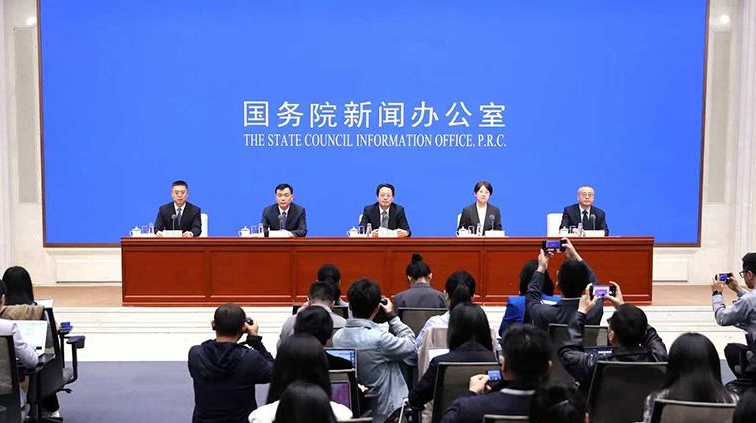
At a press conference during the "two sessions," Mr. Zheng Shanjie mentioned the use of drones to deliver food to cargo ships on the Yangtze River, which left a strong impression. What are the key considerations for promoting the high-quality development of the low-altitude economy during the 15th Five-Year Plan period? What new application scenarios will emerge? Thank you.
Wang Changlin:
This is a popular topic. I'd like to invite Mr. Zheng Jian to respond.
Zheng Jian:
Thank you for your questions, and thanks to all of you in the media for your continued attention to the low-altitude economy. Over recent years, the low-altitude economy has gained significant momentum, with strong enthusiasm across various sectors. Thanks to joint efforts, it is off to a very good start. We believe that there are high expectations for its development during the 15th Five-Year Plan period. The CPC Central Committee and the State Council have laid out plans for the high-quality development of the low-altitude economy during the 15th Five-Year Plan period. As Mr. Wang just mentioned, the low-altitude economy will be developed as an emerging pillar industry. We will pursue sound and orderly development, with reform and innovation as the guiding principle, to ensure the low-altitude economy is well regulated, operates safely and is put to flexible use. Going forward, we will focus on five areas.
First, safety will be the prerequisite. Without safety, there can be no low-altitude economy. We will prioritize the safety of the low-altitude economy, especially flight safety, and strengthen the foundation for safe development. We will enhance the full life-cycle management of aircraft, innovate and improve safety supervision mechanisms, and strictly implement regulatory measures. Local authorities are also introducing relevant regulations in light of their specific conditions and needs, further refining and clarifying the requirements for low-altitude safety management.
Second, industry serves as the "support." We will take consolidating and enhancing our industrial development advantages as our development guideline, increase the research and development of new aircraft such as high payload fixed-wing UAVs and long-endurance vertical take-off and landing aircraft, form a system of key low-altitude equipment, drive upstream and downstream supporting industries, and create comprehensive regional clusters according to local conditions.
Third, scenarios as a "guide." On the one hand, we adhere to the "three priorities and three follow-ups" principle, which means prioritizing cargo transportation over passenger transportation, prioritizing isolation over integration, and prioritizing remote suburbs over urban areas. Under strict risk control and safety assurance, we support qualified regions to prioritize the promotion of mature scenarios and cultivate and expand new scenarios with potential. We should also strengthen the system support for key elements to meet the needs of application scenarios. Among the initiatives there will be a focus on improving the level of refined airspace management, planning and scientifically laying out the low-altitude air route network. This will be in conjunction to promoting the construction of a low-altitude intelligent network system. The reason for doing so is to safely and efficiently create more scenarios that benefit thousands of households and empower various industries.
Fourth, innovation as the "driving force." Being self-supporting, risk-resilient, safe, and reliable are the key points of technological innovation in the low-altitude economy. We will deepen basic theoretical research and promote enterprise-led collaborative research among enterprises, universities, and research institutes. This will support capable private enterprises to take the lead in major scientific and technological tasks. With these efforts, we aim for breakthrough in key technologies like intelligent flight and hybrid power systems. This will comprehensively deepen integration of technological innovation and industrial innovation.
Fifth, cooperation as the "path." We will actively participate in global low-altitude economy governance, improve international cooperation mechanisms, support relevant overseas enterprises with advantages to carry out strategic investments and establish supporting industries in China. We will support domestic enterprises to further expand overseas markets, promote low-altitude products and services, and provide solution for the low-altitude economy in other countries.
As this journalist mentioned, Mr. Zheng Shanjie mentioned at a recent economic-themed press conference that drones deliver food to cargo ships on the Yangtze River quickly, stably, and conveniently, leaving a deep impression on everyone. We have compiled typical application scenarios of low-altitude economy in various regions in recent years, such as logistics and transportation, medical rescue, urban governance, agricultural and forestry operations, and surveying and inspection, forming many vivid and lively scenario cases. The low-altitude economy is becoming a part of everyday life and protecting households. It has not only effectively promoted economic and social development, but also enhanced the people's sense of fulfillment, providing "aerial answers" to people's livelihood needs.
For example, in some border towns such as Honghe and Pu'er of southwest China's Yunnan province, drones have become "air messengers," reducing the delivery time of postmen from nearly 3 hours to about 40 minutes; In Shenzhen, drones have become "air ambulances," delivering automated external defibrillators (AEDs) to the scene of emergencies in about four minutes, significantly improving the survival rate of patients within the golden rescue time; In Shanghai, drones function as "air traffic controllers," arriving at the scene of traffic accidents within two minutes to quickly take photos and collect evidence, expedite insurance claims, and reduce traffic congestion.
Recently, we have taken note of public concerns regarding difficulties in drone flight approvals. We are working with relevant departments to study and promote successful experiences and practices in some areas, such as "scan-to-fly" to improve the efficiency of flight plan approvals. We believe that flying will be safer and more convenient for everyone in the future.
Moving forward, we will work with relevant departments to help businesses solve problems and help the public enjoy convenience, ensuring that the low-altitude economy develops in a steadier and better way. Thank you.
Zhou Jianshe:
That concludes today's press conference. Thank you to all our speakers and to all our journalist friends. Goodbye!
Translated and edited by Zhu Bochen, Xu Kailin, Dong Qingpei, Cui Can, Li Congrong, Yan Bin, Liu Caiyi, Zhang Yuxin, Zhang Junmian, Li Xiao, Li Huiru, Zhou Jing, Fan Junmei, Huang Shan, David Ball, Jay Birbeck, and Tudor Finneran. In case of any discrepancy between the English and Chinese texts, the Chinese version is deemed to prevail.


 京公网安备 11010802027341号