 Share:

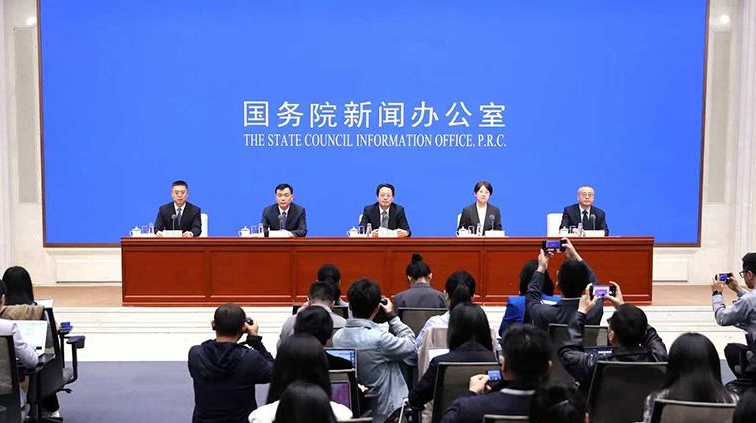
Lianhe Zaobao:
Facing the wave of high technology, how should China's traditional industries handle their transformation while continuing to create jobs? Thank you.
Wang Changlin:
I would like to invite Mr. Fu Jiuling, director general of the Department of Industry of the NDRC, to answer this question.
Fu Jiuling:
Thank you for your question. The 15th Five-Year Plan outlines a blueprint for industrial development over the next five years, which has garnered significant attention. When talking about technological revolution and industrial transformation, it is easy to focus on emerging industries and future industries while neglecting traditional ones. Some people even believe that cultivating new growth drivers means that traditional industries are no longer important. At the same time, the impact of industrial upgrading on employment is also a major concern. I'd like to share three points.
First, the innovation-driven and high-quality development of traditional industries has been ongoing and has never stopped. As we often say, each generation brings new technology, new materials, and new equipment, which reflects the process of technological iteration and industrial upgrading. Practice has shown that only products become outdated, not industries. Although traditional industries have existed for a long time, they should not be equated with low-end or backward ones. Take people's clothing, food, housing, and transportation as an example: today's clothing fabrics are incomparable to those of the past; bicycles are also getting lighter, and some are even made with carbon fiber. It's fair to say that the so-called traditional industries we see today are vastly different from those of decades ago, or even just a few years ago. The renewed vigor of revitalized traditional industries can be seen everywhere in our daily lives.
Second, traditional industries are the foundation of the real economy, and "the new three," namely, new energy vehicles, lithium-ion batteries, and photovoltaic products, all originated from traditional industries. For example, although the "three-electric system" (batteries, motors, and electronic controls) of new energy vehicles has replaced the traditional internal combustion engine powertrain, the overall vehicle manufacturing process is consistent with that of traditional fuel vehicles. The photovoltaic industry is rooted in the production of polysilicon, which belongs to the non-ferrous metals industry, and the subsequent production of silicon wafers, cells, and modules all rely on mature technologies from the electronics industry. Similarly, the production of lithium batteries originated from the traditional electrochemical and materials manufacturing industry. These industries did not come out of nowhere. They are built on the strong foundation of traditional industries and sustained innovation.
Third, we must take the initiative to understand and actively respond to the impact of new technology on employment. From the perspective of the manufacturing industry, the number of employees in various industries fluctuated during the 14th Five-Year Plan period, yet remained stable at around 110 million. Throughout human history, the impact of new technologies on employment has been an ongoing process. The trend of mechanical equipment replacing physical labor and information technology substituting part of mental labor has been ongoing all along. We can feel it in our daily lives. Some jobs are decreasing, while new professions and business models are emerging. It is both the substitution effect and the impact of job creation are at play. We need to respond proactively to achieve high-quality employment while promoting industrial upgrading.
General Secretary Xi Jinping emphasized that developing new quality productive forces does not mean neglecting or abandoning traditional industries. Traditional industries can also become new drivers of growth through optimization and upgrading. We must study and fully grasp the profound implications of his important remarks. Only then can we accurately understand the underlying logic of industrial development. In addition to "the new three" we have mentioned earlier, there are still many areas worth paying attention to during the 15th Five-Year Plan period. For example, new materials. Industries like steel, non-ferrous metals, and chemicals are traditional raw material industries. Driven by technological progress and demand, a large number of new and functional materials, what we now call new materials, are emerging from these raw material industries, with a very broad prospect. Another example is innovative drugs. Originating from chemical synthesis and biotechnology, they can better meet people's health needs and also offer huge market potential.
During the 15th Five-Year Plan period, we will fully implement the decisions and plans of the CPC Central Committee and the State Council, and intensify our efforts in optimizing and upgrading traditional industries and cultivating new growth drivers. First, we will stay committed to achieving revolutionary technological breakthroughs. We will promote the deep integration of technological and industrial innovation, strengthen the principal role of enterprises in technological innovation, accelerate the efficient translation and application of major scientific and technological advances, and inject fresh vitality into the optimization and upgrading of traditional industries. Second, we will adhere to the innovative allocation of production factors. We will further advance the construction of a unified national market, deepen market-oriented reform of factor allocation, take comprehensive measures to tackle rat race competition, and regulate market structures. This will foster a sound ecosystem for the development of traditional industries. Third, we will continue to pursue deep transformation and upgrading of industries. We will support enterprises in upgrading and transforming through digital, intelligent and green technologies, and promote quality improvement, cost reduction, and carbon reduction in key industries. This will help ensure the quality, pattern, and profile of traditional industries are continuously renewed and upgraded.
This concludes my introduction.


 京公网安备 11010802027341号