 Share:

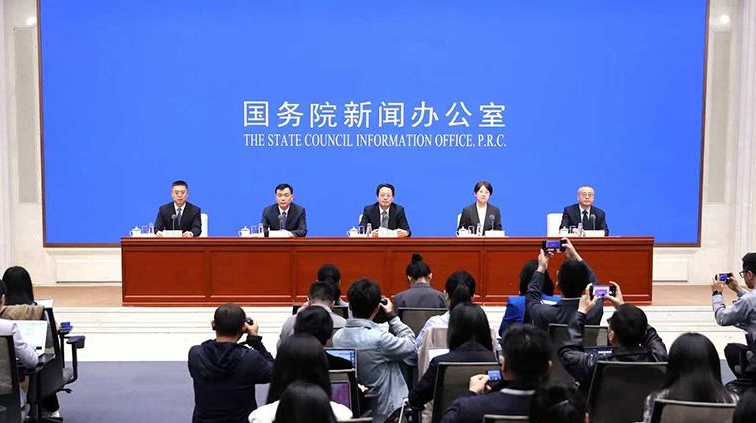
Dazhong Daily:
The outline of the 15th Five-Year Plan was officially released last month. What measures will be taken to ensure the implementation of the goals and tasks set out in the plan? Thank you.
Wang Changlin:
I'd like to invite Ms. Chen to answer this question.
Chen Lei:
Thank you for your question. General Secretary Xi Jinping has repeatedly emphasized that a plan's effectiveness depends on its implementation. To better promote the implementation of the 15th Five-Year Plan, we are accelerating efforts to strengthen implementation mechanisms in line with the arrangements of the CPC Central Committee and the State Council. We will pursue overall progress while making key breakthroughs, ensuring all goals and tasks are carried out effectively. Let me highlight three priorities we are advancing.
First, we will strengthen the planning framework and accelerate the formulation and implementation of a number of sector-specific plans. As Mr. Wang just noted, work is underway to formulate several national-level sector-specific plans focused on key areas identified in the 15th Five-Year Plan outline. Specifically, plans focused on the goal of basically realizing socialist modernization by 2035 will cover areas such as new industrialization, Digital China, agricultural and rural modernization, and a Beautiful China. Plans tailored to the stage-specific characteristics of the 15th Five-Year Plan period will address future industries, consumption expansion, population development and a new energy system. Plans with a focus on people-centered development will cover employment-first policies, education, public health, the equalization of basic public services and social security. Additional plans will also be developed for key groups such as people with disabilities. A number of national-level sector-specific plans are expected to be released in the first half of this year. The drafting process will emphasize coordination, quality improvement and a streamlined number of plans, building toward a unified and effective planning framework.
Second, we will use key tasks as a driving force, advancing major targets and key projects in a coordinated and categorized manner. This approach serves as an important driver and lever for implementing the outline. On key targets, we will differentiate between obligatory and projected targets and take tailored approaches to each. Obligatory targets include reducing carbon intensity, increasing the share of non-fossil energy consumption, lowering PM2.5 concentration and enhancing overall grain and energy production capacity. For these, we will strengthen accountability and ensure targets are broken down in a scientific and reasonable manner. Projected targets include GDP growth, the digital economy's share of output and the urbanization rate. For these, we will foster a sound policy, institutional and legal environment and promote their achievement through broad participation across society. People's well-being indicators include the number of health care professionals per 1,000 people, the share of nursing-care beds and the nursery enrollment rate. For these, we will implement more equitable, inclusive, targeted and effective social policies and increase government spending on livelihood security, reflecting a clear commitment to putting people first. Regarding major projects, we will build on the 109 major projects outlined in the plan, further refine the project lists and advance them in an orderly manner under five categories: completed, ongoing, newly launched, under preparation and under study. As you may have noticed, a number of projects have recently broken ground, including the new Guangzhou airport and the Anhui-Hubei power transmission project. Going forward, we will strengthen the supply of resource factors, improve coordination and facilitate the early launch of projects that are ready to proceed.
Third, we will track implementation progress by strengthening dynamic monitoring and conducting regular evaluations. This will be carried out in three main areas. First, we will conduct routine dynamic monitoring, closely track changes in the situation and ensure timely analysis and response. Second, we will carry out a midterm evaluation of the outline's implementation, assess progress toward goals and tasks, and propose effective measures to strengthen implementation in the latter half of the plan period. Third, as the plan period draws to a close, we will conduct a comprehensive review, take full stock of implementation, and lay a solid foundation for the formulation of the next five-year plan. The results of both the midterm evaluation and final review will be submitted to the National People's Congress and made public in a timely manner.
In short, we will pool the efforts of all parties and apply a steadfast, persistent approach to implementation, turning the CPC Central Committee and State Council's strategic plans for the next five years into tangible results. Thank you.


 京公网安备 11010802027341号