 Share:

CNR:
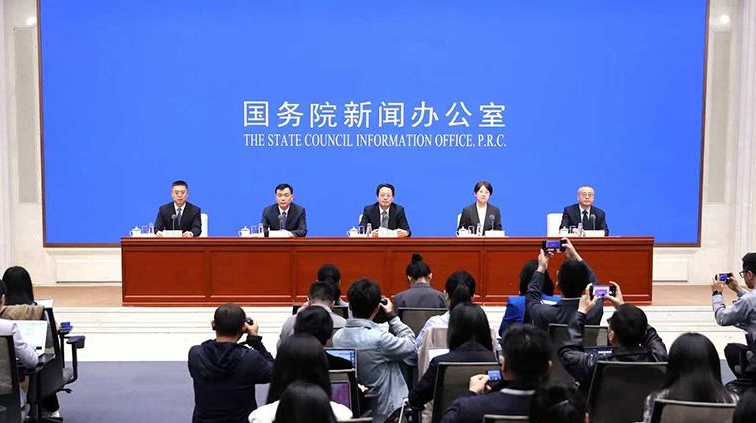
Since last year, China has vigorously rolled out special initiatives to boost consumption. How did consumption perform in the first quarter? What are the priorities for boosting consumption in the near and longer term? And how will these efforts be carried out? Thank you.
Wang Changlin:
Thank you. Boosting consumption is a strategic move to sustain growth, adjust the economic structure, and improve people's livelihoods. Since last year, a series of consumption-boosting policies have taken effect, creating new areas, growth drivers and space for household consumption. In the first quarter of this year, the consumer market was stable and improving, with service consumption demand accelerating. Three characteristics stood out.
First, China's policy-backed consumer goods trade-in program continued to deliver results. The consumer goods trade-in program has been continuously refined and has had a significant effect on driving demand for smart and green products. Sales of communication equipment by enterprises above designated size rose 20.8% year on year. Sales under the consumer goods trade-in program exceeded 430 billion yuan, benefiting more than 60 million people.
Second, service consumption was buoyant. The extended Spring Festival holiday and other factors drove rapid growth in tourism and leisure-related consumption. In the first quarter, retail sales of services grew 5.5%, outpacing goods retail sales by 3.3 percentage points. Holiday spending continued to grow, and the number of domestic trips rose sharply.
Third, new forms and models of consumption showed strong vitality. Consumers are increasingly seeking experiences, not just goods. For example, Sichuan launched 120 new consumer experiences, including immersive light shows and interactive intangible cultural heritage activities, attracting more than 56 million visitors during the Spring Festival holiday. In Heilongjiang, Jilin, Liaoning, Xinjiang and other regions, revenue from ice and snow economy services rose 62.4% year on year during the Spring Festival.
The 15th Five-Year Plan calls for a notable increase in household consumption as a share of GDP. China's vast market potential has yet to be fully tapped, leaving significant room to expand consumption, particularly in services. Going forward, we will deepen the special initiative to boost consumption and formulate a consumption expansion plan within the 15th Five-Year Plan framework. The aim is to ensure residents have stable incomes and feel able to spend, have no financial worries and feel confident spending, and enjoy a quality consumption environment that gives them a strong sense of gain and a willingness to consume. This will better enable consumption to play its fundamental role in driving economic development.
First, we will focus on strengthening consumers' spending power. We will develop mechanisms to promote employment, support enterprises in preventing layoffs and expanding hiring, and help individuals start businesses and find work. We will cultivate new jobs and occupations, strengthen vocational skills training, and promote skills-based employment and income growth while steadily raising the minimum wage. We will also improve how income is distributed according to factors of production, refine mechanisms that reward knowledge and value creation, build a skills-based pay system, and expand property income for both urban and rural residents through multiple channels. All these efforts will continuously enhance residents' spending power.
Second, we will focus on improving the quality of consumption. We will make effective use of the consumer goods trade-in program, linking consumption stimulus with improvements to people's livelihoods and encouraging spending through high-quality supply. We will launch capacity-expanding and quality-improvement initiatives in the service sector, focusing on public health, smart elderly care and cultural tourism to increase the supply of high-quality, diverse, and accessible consumer services. Working with relevant departments, we will refine policies on brand building and online-offline product standardization to better align supply with demand.
Third, we will focus on cultivating new consumption scenarios. We will fully leverage China's vast market and diverse application scenarios to meet diversified and personalized consumption needs, creating more interactive and intelligent consumption experiences. We will promote the integrated development and innovative upgrading of consumption scenarios, and where conditions are met, include them in the national-level list of landmark application scenario projects to strengthen their guiding and leading role.
Fourth, we will continue to improve the consumption environment. In terms of hard investment, we will coordinate various funding channels to accelerate the construction of consumer infrastructure. This includes central government budgetary investment to support the construction of facilities for elderly care, child care, cultural tourism and sports, the issuance of consumer infrastructure REITs, and the use of ultra-long-term special treasury bonds to support the upgrading of offline consumer commercial facilities and equipment. On the institutional side, we will actively encourage local governments to refine policies and measures on traffic restrictions, purchase restrictions, new forms of consumption, and market access based on local conditions. We will also accelerate the removal of unreasonable restrictive measures in the consumption sector and work together to create an environment where people are willing, confident and happy to spend.
Additionally, spring and autumn breaks for primary and secondary school students have drawn wide public interest. We will encourage more localities with the necessary conditions to explore this actively. At the same time, we will ensure better coordination between student holidays and parents' paid annual leave and increase the supply of services such as family travel, study tours and holiday child care, giving parents more time to travel with their children. Thank you.


 京公网安备 11010802027341号