Share:

Zhou Jianshe:
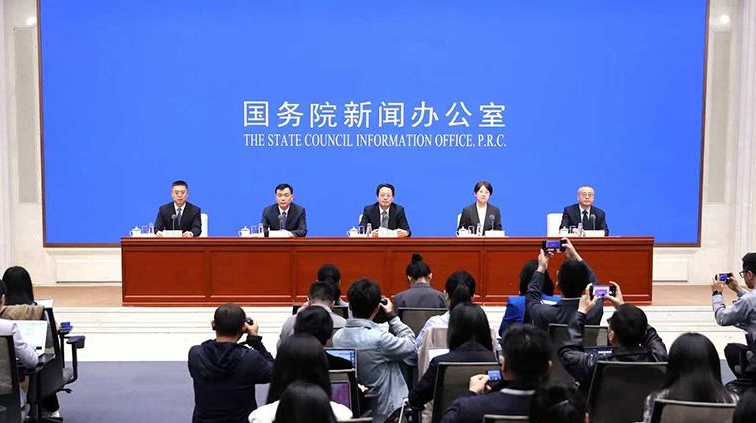
Please continue with your questions. There are two more reporters with questions.
Elephant News:
Currently, China is accelerating the development of the National 1-2-3 Travel Circle, which has generated strong public interest. What are the next steps in developing the modern integrated transportation system? What can we expect? Thank you.
Wang Changlin:
Thank you. I would like to invite Ms. Chen to take this question.
Chen Lei:
Thank you for your questions. General Secretary Xi Jinping attaches great importance to the development of the transportation sector and has emphasized that transportation serves as a pioneer in advancing Chinese modernization. During the 14th Five-Year Plan period, under the strong leadership of the CPC Central Committee, China's transportation sector has achieved historic progress, with breakthroughs in building a comprehensive transport system. The period saw the largest investment and fastest network expansion on record, providing strong support for high-quality development and high-level security.
First, the infrastructure network has steadily improved. More than 90% of the national comprehensive three-dimensional transport network is now complete. Expressways in operation have reached nearly 200,000 kilometers and high-speed rail mileage has surpassed 50,000 kilometers. Second, transport services have become more convenient. The National 1-2-3 Travel Circle is taking shape, enabling one-hour commuting within metropolitan areas, two-hour connectivity among city clusters and three-hour access between major cities nationwide. The Global 1-2-3 Logistics Circle is also advancing, targeting one-day delivery within China, two-day delivery to neighboring countries and three-day delivery to major cities worldwide. Efforts to reduce costs and improve quality and efficiency have also progressed steadily. Third, technical equipment has become more advanced. The CR450 EMU prototype has entered operational testing, the C919 large passenger aircraft is now in regular commercial service and unmanned transport vehicles have seen innovative applications. Fourth, the green transition has delivered notable results. Rail-water intermodal container volume at ports has grown by an average of 15% annually. Charging facilities now cover more than 98% of expressway service areas, and carbon dioxide emission intensity in the transport sector has fallen 5%. Overall, after more than three decades of rapid development, China's transportation sector is shifting toward coordinated cross-regional planning, integrated multimodal connectivity and deeper cross-sector integration. Growth drivers are moving toward structural optimization, digital and intelligent applications, and coordinated green transformation. Meanwhile, the growth model is moving toward quality-driven development that balances expanding capacity with upgrading existing infrastructure.
During the 15th Five-Year Plan period, efforts to modernize the comprehensive transport system will focus on the following areas.
First, we will strengthen weak links, reinforce key segments and improve quality. We will advance the construction of major cross-regional and cross-basin corridors and develop high-quality strategic backbone corridors along coastal, border and river regions, as well as corridors linking Xinjiang, Xizang and the New International Land-Sea Trade Corridor in the western region. We will also improve the layout of cross-river, cross-sea and cross-bay passages, develop international and national comprehensive transport hub cities, and enhance network coverage, accessibility and international connectivity.
Second, we will optimize the transport structure. We will make better use of existing infrastructure including transport lines and stations, improve the overall efficiency of new infrastructure investment and fully implement modern maintenance programs. We will address shortcomings in urban and rural transport and enhance regional connectivity. We will improve the supply of convenient passenger transport services and strengthen the development of barrier-free facilities. We will also promote cost reduction, quality improvement and efficiency gains in transport and logistics.
Third, we will enhance safety and resilience. We will strengthen safety capacity in key areas and improve the intrinsic safety levels of facilities and equipment. We will also enhance early warning, monitoring and emergency response capabilities, ensure the safety of major projects and develop a diversified and resilient international transport corridor system.
Fourth, we will deepen integrated and coordinated development. We will improve passenger and freight distribution systems and promote the integration of transport with sectors including energy, water resources, information and low-altitude aviation. We will also foster new models that link transport with tourism and develop corridor-based economies, hub economies and modern shipping services.
The NDRC and the Ministry of Transport are currently leading the formulation of the Development Plan for a Modern Comprehensive Transportation System for the 15th Five-Year Plan Period. The plan will outline the goals, key tasks and major projects for the period. We welcome continued attention from our media friends. Thank you.
Zhou Jianshe:
Last question, please.


 京公网安备 11010802027341号